Top 10 Real Estate Agent Marketing Ideas for 2026


In the hyper-competitive world of real estate, especially in markets like New York City, simply being a good agent isn't enough. Your success depends on your ability to connect with potential clients consistently and effectively. The right marketing strategy is no longer a luxury; it's the engine that drives your business forward. This guide moves beyond the basics, offering a comprehensive roundup of the top 10 actionable real estate agent marketing ideas designed to build your brand, generate high-quality leads, and secure more listings.
We've designed this resource to be a practical blueprint, not a collection of vague theories. You'll find step-by-step instructions, specific examples, and fresh perspectives on both digital and traditional tactics. Whether you're a new agent trying to make a name for yourself in Queens or an established broker in Manhattan looking to scale, these proven strategies will help you create a powerful marketing system. For a deeper dive into overarching strategies specifically designed for the property market, explore a comprehensive modern playbook for marketing for real estate.
Each idea in this list is a crucial component of a modern marketing plan. We will cover everything from dominating local search with Google Business Profile optimization and building a lead-generating website with IDX integration to creating compelling video content and nurturing your sphere of influence. By implementing these specific tactics, you can establish yourself as a go-to market authority, build a sustainable pipeline of clients, and achieve a measurable return on your marketing investment. Let's dive into the ideas that will fuel your growth.
1. Local SEO & Google Business Profile Optimization
Local Search Engine Optimization (SEO) is a powerful real estate agent marketing idea focused on making you highly visible in geographically-specific searches. When a potential client in Queens types "real estate agent near me" or "homes for sale in Astoria" into Google, local SEO is what determines if your name appears at the top of the results, especially in the coveted Google Maps "local pack." For agents competing block by block in a dense market like New York City, mastering this is not just an option; it's essential for survival and growth.
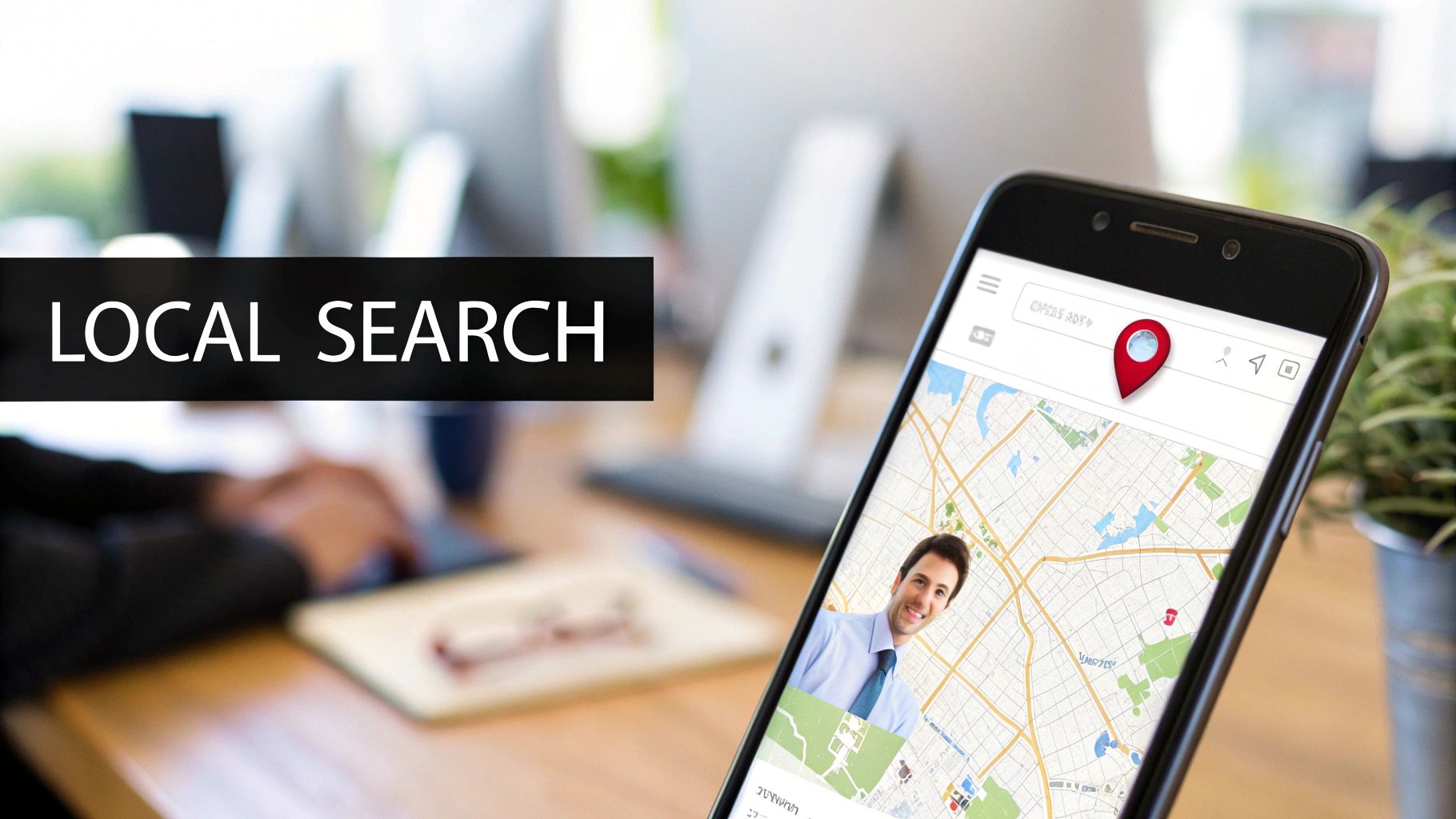
The cornerstone of local SEO is your Google Business Profile (GBP). This free tool acts as a digital storefront, providing a snapshot of your business directly on Google Search and Maps. Optimizing it with high-quality property photos, consistent business information, client reviews, and service details ensures you capture the attention of motivated local buyers and sellers at the exact moment they are searching for a professional.
Actionable Steps for Implementation
To turn your GBP into a lead-generation machine, focus on these key tasks:
- NAP Consistency: Ensure your Name, Address, and Phone number (NAP) are identical across your website, GBP, and other online directories like Zillow and Realtor.com. Inconsistencies can confuse search engines and harm your ranking.
- Encourage Detailed Reviews: Actively ask satisfied clients to leave reviews. Gently guide them to mention the specific neighborhood or borough (e.g., "Jane was a fantastic agent for selling our home in Flushing, Queens").
- Utilize Google Posts: Treat your GBP like a social media feed. Regularly share new listings, open house dates, market updates, and neighborhood news using Google Posts to show you are an active, local expert.
- Build Local Citations: Get your business listed on reputable local and industry-specific directories. For NYC agents, this includes local chamber of commerce sites and real estate-specific platforms.
By consistently applying these strategies, you can dominate local search results and connect with clients right in your target neighborhoods. To dive deeper into the specific elements that influence your visibility, explore these in-depth local SEO ranking factors on webdesignatny.com. This approach is fundamental for building a sustainable pipeline of hyperlocal leads.
2. Professional Real Estate Website with IDX Integration
A professional website is your digital business card, headquarters, and lead capture system all in one. Among the most effective real estate agent marketing ideas, building a site with IDX (Internet Data Exchange) integration transforms it from a simple brochure into a powerful, interactive tool. This technology allows you to pull live MLS listings directly onto your own domain, enabling clients to search for properties without ever leaving your site. This keeps potential buyers engaged and establishes you as the primary resource for their home search.
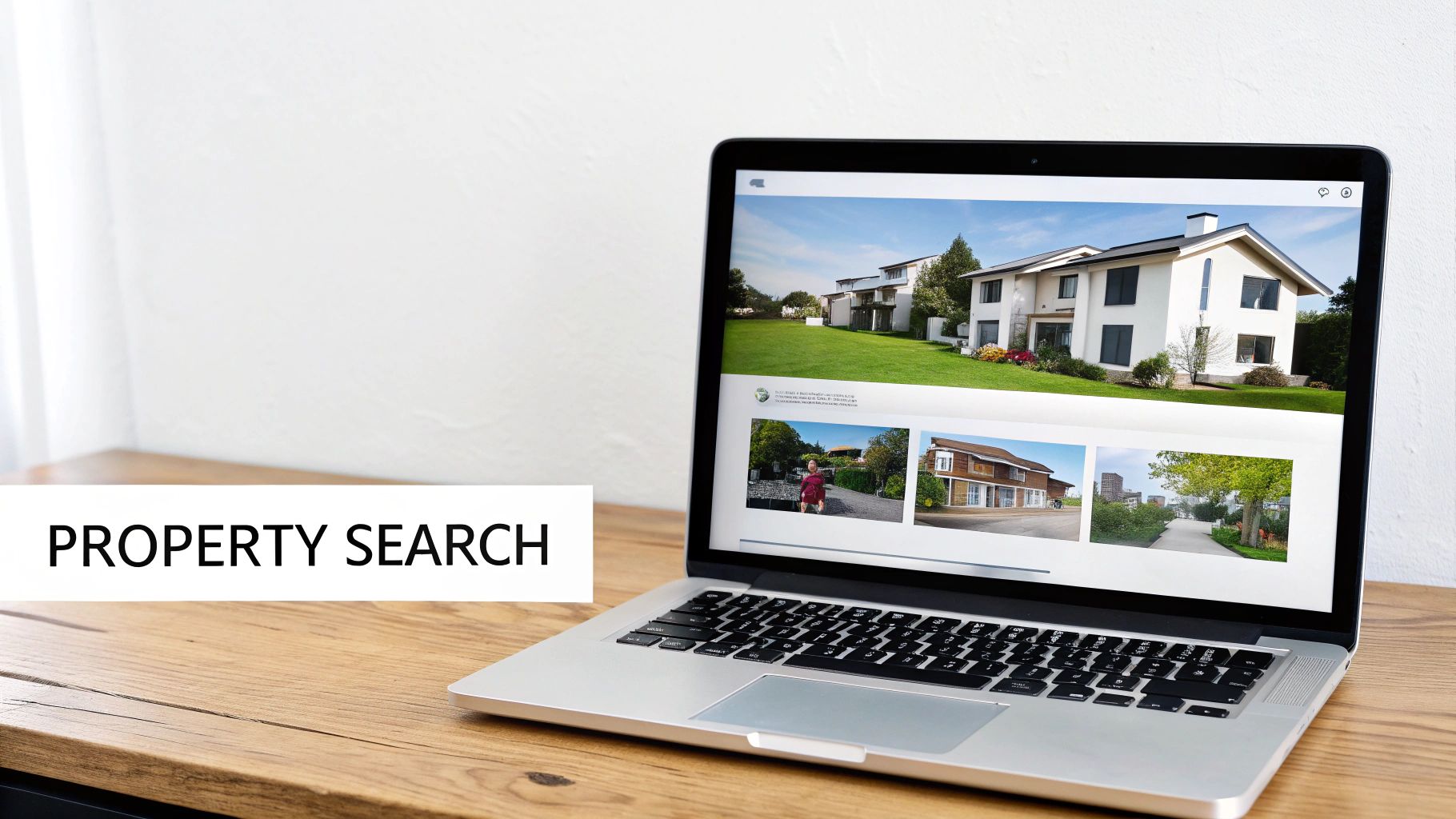
The core benefit of an IDX-enabled website is control. Instead of sending traffic to third-party portals like Zillow where clients are exposed to competitor ads, you keep them within your branded ecosystem. A well-designed site serves as a central hub for all your marketing efforts, from social media campaigns to email newsletters, consistently driving traffic back to a platform you own and manage for lead generation.
Actionable Steps for Implementation
To make your website a conversion-focused asset, integrate these key elements:
- Prioritize Mobile Speed: Ensure your website loads in under 3 seconds on mobile devices. A slow site will cause potential leads to abandon their search and go elsewhere.
- Create Hyperlocal Content: Develop detailed neighborhood guides for areas you serve, like Astoria or Forest Hills in Queens. Include local market data, school information, and lifestyle insights to attract organic search traffic.
- Showcase Social Proof: Prominently feature client testimonials, case studies, and recent sales on your homepage to build instant trust and credibility with new visitors.
- Integrate Lead Capture Tools: Use strategic calls-to-action, contact forms, mortgage calculators, and prompts to "save this search" to capture visitor information and automatically feed it into your CRM.
A professionally built website is a long-term investment in your brand and business growth. For a deeper look into turning your site into a consistent source of new clients, explore these strategies for real estate website lead generation on webdesignatny.com. This approach solidifies your online presence and gives you a competitive edge.
3. Content Marketing & Neighborhood Blogs
Content marketing is a strategic real estate agent marketing idea focused on creating and distributing valuable, relevant content to attract and retain a clearly defined audience. Instead of directly pitching your services, you provide genuine value upfront, establishing yourself as a trusted local authority. For an agent in Queens, this could mean writing a detailed guide to the best schools in Forest Hills or creating a video tour of Astoria's vibrant food scene, attracting potential clients long before they are ready to transact.
The cornerstone of this approach is a neighborhood-focused blog hosted on your website. This becomes a powerful asset for organic search traffic. When a family researches "moving to Bayside, Queens," your comprehensive neighborhood guide can appear at the top of Google, building brand awareness and trust. This positions you not just as an agent, but as an indispensable local resource, which is a powerful differentiator in a competitive market.
Actionable Steps for Implementation
To transform your blog into a lead-generating engine, focus on creating content that answers your clients' most pressing questions:
- Target Long-Tail Keywords: Focus on specific, localized search terms. Instead of "NYC homes for sale," create content for "three-bedroom co-ops in Jackson Heights under $700k" or "what's the commute like from Flushing to Manhattan?" These attract highly qualified, motivated searchers.
- Develop Neighborhood Guides: Create in-depth guides for each neighborhood you serve. Include information on parks, transit, restaurants, and local market statistics. This evergreen content consistently draws organic traffic.
- Answer FAQs: Write blog posts that directly answer common client questions like "What are closing costs in NYC?" or "How to win a bidding war on a Brooklyn apartment." Each post solves a problem and demonstrates your expertise.
- Create Market Updates: Publish quarterly or monthly market analysis reports for your specific area. Use local data and insights to showcase your deep understanding of market trends, attracting potential sellers and investors.
By consistently creating high-value, hyperlocal content, you build a powerful marketing asset that works for you 24/7. To structure your efforts effectively, you can get started with this comprehensive content marketing strategy template on webdesignatny.com. This approach builds long-term authority and a steady stream of inbound leads.
4. Social Media Marketing & Video Content
Social media marketing has evolved from a simple networking tool into a powerhouse for real estate agents. It’s a dynamic marketing idea that allows you to showcase properties, build a personal brand, and engage directly with a community of potential clients. For agents in visually rich markets like New York City, platforms like Instagram, TikTok, and Facebook are invaluable for bringing listings to life and connecting with buyers and sellers on a more personal level.
The core of modern real estate social media is short-form video content. Quick, engaging videos like property tours, neighborhood spotlights, and market updates capture attention far more effectively than static images. Think of the viral TikToks showcasing multi-million dollar Manhattan penthouses or Instagram Reels offering a glimpse into a charming Queens lifestyle. This strategy moves beyond a simple listing photo, allowing you to tell a story, establish expertise, and build a loyal following that translates into tangible leads.
Actionable Steps for Implementation
To leverage social media and video for lead generation, integrate these tactics into your weekly workflow:
- Prioritize Short-Form Video: Create and post brief video content (15-60 seconds) 3-5 times per week. Use trending audio and relevant hashtags (e.g.,
#QueensRealEstate,#NYCApartmentTour) to maximize reach and discoverability on platforms like Instagram Reels and TikTok. - Showcase, Don't Just List: Instead of just posting listing photos, create dynamic video tours. Go live during an open house on Instagram or Facebook to engage a wider audience in real-time and answer questions on the spot.
- Establish Expertise: Share quick market updates, explain complex real estate terms, or offer tips for first-time homebuyers in your target neighborhoods. This positions you as a go-to local authority, not just a salesperson.
- Use Hyperlocal Tagging: Always tag the specific neighborhood, borough, and even local businesses in your posts. This increases your visibility among users searching for content related to that specific area, like "Astoria, Queens."
By consistently creating authentic and valuable video content, you can transform your social media profiles into a powerful real estate agent marketing ideas engine, attracting clients and closing more deals.
5. Email Marketing & Automated Nurture Campaigns
Email marketing is one of the highest-ROI real estate agent marketing ideas, allowing you to build and maintain relationships at scale. It’s not about spamming your list; it's about systematically nurturing leads, staying in touch with past clients, and remaining top-of-mind with your sphere of influence. Through automated email sequences, you can deliver timely property alerts, market updates, and valuable neighborhood content, ensuring you are the go-to expert when someone is ready to transact.
The power of email lies in its ability to segment and personalize communication. A new lead who just signed up on your website requires a different message than a past client you helped five years ago. Platforms like Mailchimp or ConvertKit allow you to create automated “drip” campaigns that guide subscribers through the client journey. For a busy agent in Queens, an automated campaign can convert a cold lead into a warm appointment while you are out showing properties in Bayside or Forest Hills.
Actionable Steps for Implementation
To build an effective email marketing engine, focus on segmentation and automation:
- Segment Your Audience: Divide your contact list into specific groups such as "New Buyer Leads," "Past Seller Clients," "Local Renters," and "Sphere of Influence." This allows you to send highly relevant content to each.
- Create Nurture Sequences: Develop a series of automated emails for new leads. The sequence could include a welcome email, a guide to buying in your area, client testimonials, and eventually, a call-to-action to schedule a consultation.
- Deliver Hyperlocal Value: Send a monthly or bi-weekly newsletter with hyper-local market stats for specific neighborhoods like Astoria or Long Island City. Include sold data, new listings, and community news to position yourself as the local expert.
- Personalize and Automate: Use personalization tokens to include the recipient's name or a neighborhood they searched for. Set up automated birthday and home-anniversary emails for past clients to maintain long-term relationships and generate referral business.
6. Google Ads & Paid Search Marketing
Google Ads offers a direct and powerful way to appear at the top of search results, capturing the attention of highly motivated buyers and sellers. This paid search marketing approach allows you to bid on specific keywords like "homes for sale in Forest Hills" or "top real estate agent in Queens," ensuring your ad is displayed to users actively searching for your services. Unlike organic SEO, which takes time, paid search can generate immediate traffic and leads, making it an essential tool for agents who need to fill their pipeline quickly.
The primary advantage of this real estate agent marketing idea is its intent-driven nature. You are reaching potential clients at the exact moment they are looking for a real estate professional, leading to some of the highest conversion rates among all paid advertising channels. For instance, top NYC agents often bid $15-25 per click for luxury keywords, while many Queens-based agents profitably acquire new leads for $30-50 each by targeting more specific, neighborhood-focused search terms.
Actionable Steps for Implementation
To launch a successful Google Ads campaign that delivers a strong return on investment, concentrate on these strategic actions:
- Target High-Intent Keywords: Focus your budget on terms that signal a user is ready to act. Examples include "sell my home in Astoria" or "condos for sale Long Island City." Use negative keywords (e.g., "jobs," "school") to filter out irrelevant traffic.
- Create Hyper-Local Landing Pages: Don't send paid traffic to your generic homepage. Design specific landing pages for each neighborhood or ad campaign (e.g., a "Bayside Homes for Sale" page) that align perfectly with your ad copy and provide a clear call-to-action.
- Use Ad Extensions: Enhance your ads with extensions like Lead Forms to capture user info directly, Sitelinks to highlight specific pages, and Call Extensions to drive immediate phone inquiries from mobile searchers.
- Monitor Cost-Per-Lead (CPL): Set a realistic daily budget ($30-50 is a good starting point for consistent traffic) and meticulously track your CPL. This key metric will tell you exactly how much you're spending to acquire each new prospect, allowing you to optimize bids for profitability.
By pairing a well-structured campaign with high-converting landing pages, you can transform Google Ads into a predictable and scalable source of exclusive leads.
7. Facebook & Instagram Ads with Audience Targeting
Social media advertising on platforms like Facebook and Instagram is a highly effective real estate agent marketing idea for reaching hyper-specific audiences. Unlike traditional marketing, which casts a wide net, these ads allow you to target users based on demographics, interests, online behaviors, and even their physical location. For agents in competitive markets like Brooklyn or Queens, this means you can deliver tailored messages about a new listing directly to potential buyers who live, work, and have shown interest in that exact neighborhood.
The power of these platforms lies in their sophisticated ad-targeting capabilities. You can create campaigns specifically for first-time homebuyers, luxury property investors, or families looking to upgrade. By using tools like the Meta Pixel, you can also retarget individuals who have previously visited your website, keeping your brand top-of-mind as they move through their decision-making process. This approach transforms advertising from an expense into a strategic investment in lead generation.
Actionable Steps for Implementation
To launch a profitable social media ad campaign, focus on precision and testing:
- Define Your Audience Persona: Create separate campaigns for different client types. Target users with interests like "Zillow," "home improvement," or "real estate investing," and layer this with location targeting for specific zip codes.
- Utilize Compelling Video: Create short video ads showcasing property tours, neighborhood highlights, or client testimonials. Video consistently outperforms static images in engagement and helps build a personal connection with viewers.
- Implement Retargeting: Install the Meta Pixel on your website. This allows you to create a "warm" audience of people who have already viewed your listings and serve them follow-up ads, significantly increasing conversion rates.
- Start Small and Scale: Begin with a modest daily budget, such as $15 to $25, and run multiple ad variations (different images, headlines, and copy). Identify the top-performing ads and reallocate your budget to scale what works.
By leveraging detailed targeting and retargeting, agents can build a predictable pipeline of qualified leads, often acquiring them for a fraction of the cost of other channels.
8. Virtual Tours & 3D Property Showcases
Virtual tours and 3D showcases are powerful real estate agent marketing ideas that have transformed how buyers interact with listings. By using technologies like Matterport, these immersive experiences allow potential clients to digitally walk through a property from anywhere in the world. This not only filters for more serious, qualified buyers but also saves valuable time for both agents and sellers by reducing the need for preliminary in-person showings. For attracting out-of-state or international buyers to a competitive market like NYC, a high-quality virtual tour is no longer a luxury; it's a necessity.
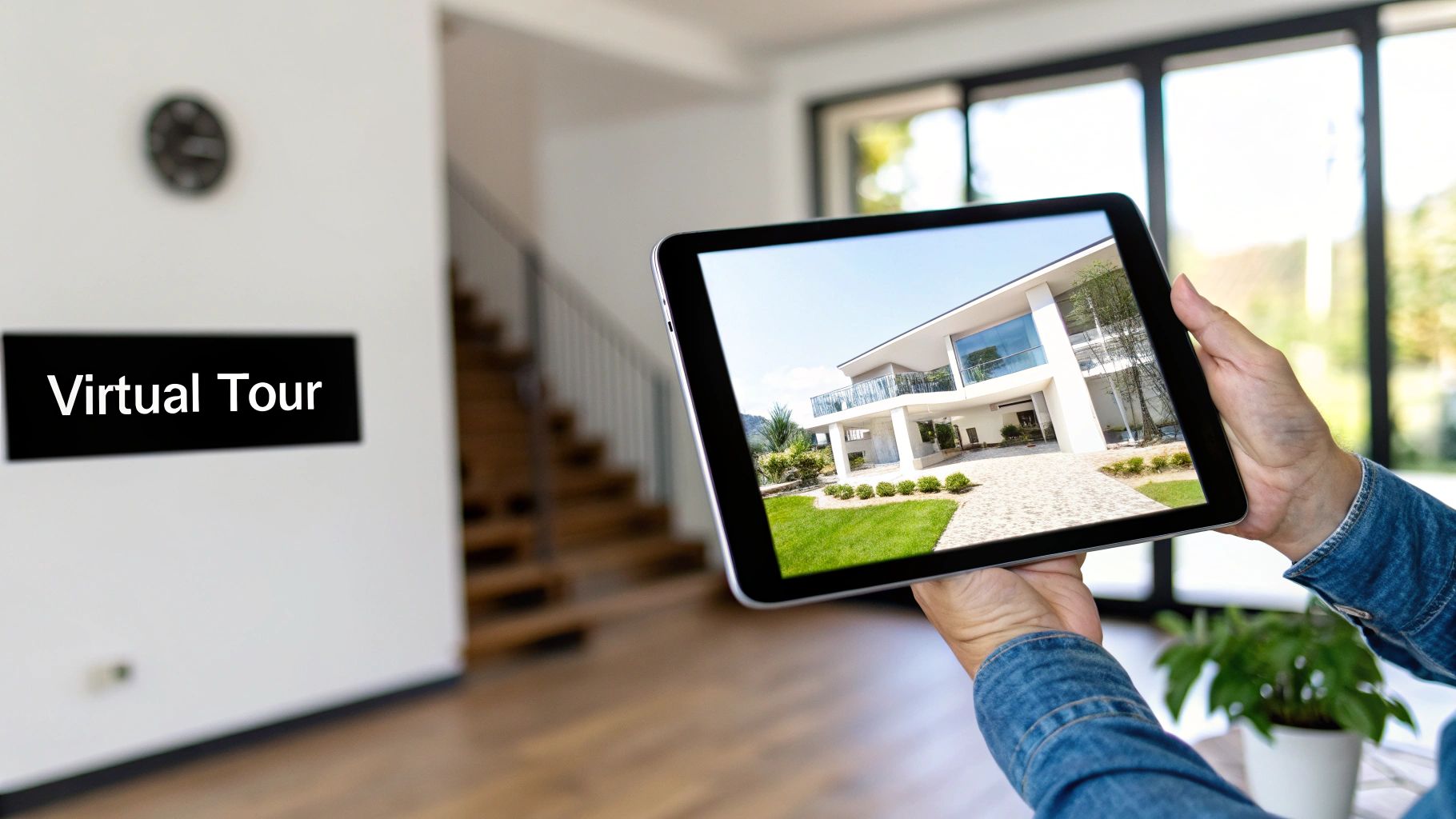
The core benefit of a 3D tour is its ability to provide a true sense of a home's layout, flow, and scale that static photos cannot convey. It builds an emotional connection and helps buyers visualize themselves in the space before they ever step inside. Agents in Queens and Brooklyn have seen properties with professional Matterport tours sell faster and attract more offers, establishing this technology as a key differentiator in a crowded marketplace.
Actionable Steps for Implementation
To integrate virtual tours effectively into your property marketing, focus on these strategies:
- Invest Strategically: Prioritize professional Matterport or 3D tours for mid-to-high-value listings. The investment delivers a significant return by attracting a wider, more qualified audience.
- Enhance with Drone Footage: For properties with significant land, unique exteriors, or desirable neighborhood features, complement your interior tour with aerial drone photography to showcase the complete context of the location.
- Promote Extensively: Don't just bury the tour on the listing page. Actively promote it in your MLS descriptions, social media posts, email newsletters, and digital ads to maximize viewership.
- Leverage Virtual Staging: For vacant properties, use virtual staging within the tour to furnish rooms digitally. This helps buyers overcome the challenge of visualizing a home's potential and makes the space feel more inviting. To captivate potential buyers, consider leveraging innovative tools like an AI photo editing for real estate app, which many top East End agents use to enhance their property showcases.
Here is an example of a high-quality cinematic real estate video that can be combined with a 3D tour for maximum impact:
9. Referral Marketing & Sphere of Influence Building
Referral marketing is a powerful real estate agent marketing idea centered on systematically generating new leads from your existing network. Instead of chasing cold leads, you leverage the trust you've built with past clients, friends, family, and professional partners to get warm introductions. For agents in competitive areas like Queens, where reputation travels fast, a single referral from a satisfied homeowner in Astoria can be more valuable than dozens of online leads because it comes with built-in trust and credibility.
This strategy involves nurturing your Sphere of Influence (SOI), which includes everyone you know who could potentially use your services or refer someone who can. By staying top-of-mind with this group through consistent, value-driven communication, you create a reliable and cost-effective pipeline of high-quality leads. Top-producing agents often report that over 50% of their annual business comes directly from referrals, proving this is not a passive activity but a core business-building system.
Actionable Steps for Implementation
To turn your network into a predictable source of business, focus on these systematic efforts:
- Create a Simple Referral Program: You don't need a complex system. Offer a simple thank-you gift, like a high-quality local restaurant gift card, to anyone who sends you a successful referral. The key is to acknowledge and appreciate the gesture.
- Segment Your SOI: Use your CRM to categorize your contacts (e.g., Past Clients, A-List Supporters, Professional Partners). Tailor your communication for each group to make it more personal and effective.
- Host Appreciation Events: Organize a quarterly or semi-annual event for your best referral sources and past clients. This could be a happy hour at a local Queens brewery or a family-friendly picnic, strengthening relationships beyond the transaction.
- Partner with Local Professionals: Actively build relationships with mortgage lenders, home inspectors, and attorneys. Set up a reciprocal referral system where you both benefit from sending clients to trusted partners.
By proactively managing your relationships and showing genuine appreciation, you can build a thriving, referral-based business that grows organically year after year.
10. Video Marketing & YouTube Channel Strategy
Video marketing is a dynamic real estate agent marketing idea that uses engaging visual content to build authority, showcase properties, and connect with clients on a personal level. YouTube, as the world's second-largest search engine, offers a powerful platform for agents to create a long-term asset. When a potential buyer in Queens searches for "what it's like to live in Astoria," a high-quality neighborhood tour video can position you as the go-to local expert, generating leads long after it's published.
The core of this strategy is a dedicated YouTube channel that serves as a library of valuable content. Unlike fleeting social media posts, YouTube videos have a long shelf life and benefit from Google's search algorithm. Well-optimized videos like property tours, market updates, and home-buying guides can rank in both YouTube and Google search results, establishing your expertise and attracting a steady stream of qualified viewers and potential clients.
Actionable Steps for Implementation
To build a YouTube channel that drives business growth, focus on these strategic actions:
- Create Pillar Content: Develop comprehensive neighborhood guide videos (10-15 minutes long) for your key service areas like Jackson Heights or Long Island City. Cover local amenities, schools, transit, and lifestyle to capture top-of-funnel search traffic.
- Systemize Property Tours: Film a professional video tour for every single listing. These videos serve your current sellers while also acting as a powerful portfolio to attract future clients looking for an agent with strong marketing skills.
- Optimize for Search: Treat every video like a web page. Use keyword-rich titles and descriptions (e.g., "Luxury 2-Bedroom Condo Tour in Forest Hills, Queens"). Organize videos into playlists by neighborhood or property type to improve user experience.
- Drive Engagement: Include clear calls-to-action in your videos, asking viewers to subscribe, leave a comment, or visit your website for more information. Actively respond to comments to signal to YouTube's algorithm that your content is engaging.
By consistently creating and promoting valuable video content, you can build a powerful marketing channel that generates leads, enhances your brand, and solidifies your reputation as a market authority.
Top 10 Real Estate Agent Marketing Strategies — Comparison
| Strategy | Implementation Complexity 🔄 | Resource Requirements ⚡ | Expected Outcomes 📊 | Ideal Use Cases 💡 | Key Advantages ⭐ |
|---|---|---|---|---|---|
| Local SEO & Google Business Profile Optimization | Medium — ongoing management, citation work 🔄 | Low–Medium — time, local citations, review management ⚡ | High — targeted local leads; long-term visibility 📊 | Local agents competing in neighborhood-specific markets 💡 | Highly targeted traffic; credibility via reviews; maps visibility ⭐⭐⭐ |
| Professional Real Estate Website with IDX Integration | High — custom build, IDX setup, technical SEO 🔄 | High — development costs, IDX fees, maintenance ⚡ | Very High — 24/7 lead capture; improved conversion rates 📊 | Agents wanting full MLS integration and lead systems 💡 | Full control of listings; strong lead capture and analytics ⭐⭐⭐ |
| Content Marketing & Neighborhood Blogs | Medium–High — editorial calendar and SEO work 🔄 | Medium — writing, research, occasional video ⚡ | High (long-term) — organic traffic and authority over months 📊 | Building neighborhood authority and inbound leads 💡 | Sustainable organic traffic; positions agent as market expert ⭐⭐⭐ |
| Social Media Marketing & Video Content | Medium — creative cadence and platform strategy 🔄 | Medium — content creation, editing tools, ad spend ⚡ | Medium–High — brand awareness and engagement 📊 | Consumer-facing branding; younger demographics; listing teasers 💡 | High engagement and visual reach; platform virality potential ⭐⭐ |
| Email Marketing & Automated Nurture Campaigns | Medium — segmentation and automation setup 🔄 | Low–Medium — ESP subscription, content creation ⚡ | Very High — excellent ROI and lead-to-client conversion 📊 | Nurturing leads, past clients, and referral follow-up 💡 | Exceptional ROI; personalized automated nurturing; measurable results ⭐⭐⭐ |
| Google Ads & Paid Search Marketing | High — continual optimization and bidding strategy 🔄 | High — CPCs in competitive markets; management costs ⚡ | Medium–High — immediate, high-intent leads when optimized 📊 | Urgent lead generation and competitive urban markets 💡 | Instant top-page visibility; highly targeted search intent ⭐⭐ |
| Facebook & Instagram Ads with Audience Targeting | Medium — audience building and creative testing 🔄 | Medium — ad creative, targeting setup, moderate budget ⚡ | Medium — awareness and retargeting lead generation 📊 | Visual property promotion and retargeting website visitors 💡 | Cost-effective visuals; precise demographic targeting ⭐⭐ |
| Virtual Tours & 3D Property Showcases | Medium–High — technical capture and editing skills 🔄 | Medium–High — Matterport/drone costs and subscriptions ⚡ | High — higher engagement, better-qualified buyers, reduced showings 📊 | High-end listings, remote buyers, and rentals with visual needs 💡 | Strong listing differentiation; better buyer vetting; SEO-rich media ⭐⭐⭐ |
| Referral Marketing & Sphere of Influence Building | Low–Medium — systematic outreach and relationship building 🔄 | Low — time, small incentives, CRM tracking ⚡ | Very High — highest close rates and predictable business 📊 | Long-term sustainable business and repeat/referral growth 💡 | Lowest CPL; highest conversion; trust-based leads ⭐⭐⭐ |
| Video Marketing & YouTube Channel Strategy | High — consistent production, SEO, and channel growth 🔄 | Medium–High — equipment, editing, time or outsourcing ⚡ | High (long-term) — passive organic leads and authority over time 📊 | Authority building, neighborhood guides, and evergreen content 💡 | Long-term SEO value; scalable audience; strong storytelling potential ⭐⭐⭐ |
Putting Your Plan Into Action: From Ideas to Income
We've explored a comprehensive blueprint of powerful real estate agent marketing ideas, from mastering Local SEO and your Google Business Profile to launching targeted social media campaigns and nurturing your sphere of influence. The sheer volume of options can feel overwhelming, but the goal isn't to do everything at once. The true secret to success lies in selective, consistent, and strategic execution.
The most successful agents don't just collect ideas; they build sustainable systems. They understand that a single well-executed strategy is far more potent than a dozen half-hearted attempts. Your path to a fuller pipeline and consistent closings begins by choosing the right tools for your specific market and personal strengths.
From Information Overload to Focused Implementation
The difference between a thriving real estate business and one that constantly struggles for leads often comes down to one word: focus. Instead of trying to be a master of all ten strategies we've discussed, commit to mastering two or three.
How do you choose where to start? Consider these questions:
- What are your natural strengths? If you're a natural connector and speaker, doubling down on video content and local networking might be your fastest path to ROI. If you're a talented writer, a hyperlocal neighborhood blog could become your most powerful lead-generation asset.
- Who is your ideal client? Are you targeting first-time homebuyers in Astoria, Queens, who are active on Instagram? Or are you focused on luxury sellers in Manhattan who are more likely to respond to a professional website and targeted referral requests? Your audience dictates your channel.
- What resources (time and budget) do you have? Content marketing and sphere-of-influence building are cost-effective but require a significant time investment. Paid advertising on Google or Facebook can deliver faster results but requires a dedicated budget.
For example, an agent focused on the diverse communities of Jackson Heights could start by creating neighborhood-specific video tours and guides, then amplify them with a modest Facebook Ads budget targeted to that specific zip code. This focused approach builds hyperlocal authority and generates qualified leads more effectively than a scattered, generic strategy.
The Power of Measurement and Adaptation
Once you've chosen your initial strategies, the next critical step is to track your results relentlessly. Marketing without measurement is just guessing. You must establish key performance indicators (KPIs) to understand what's working and what isn't.
Your measurement framework could include:
- Lead Source Tracking: Where are your best leads coming from? Is it your Google Business Profile, a specific blog post, or a referral from a past client? Use your CRM to tag every new contact with its source.
- Website Analytics: Monitor metrics like organic traffic, bounce rate, and time on page. Are visitors from your blog posts exploring your listings? Are they filling out your contact form?
- Cost Per Lead (CPL): For any paid campaigns, calculate your CPL by dividing your total ad spend by the number of leads generated. This tells you exactly how much it costs to acquire a potential client from that channel.
By reviewing these metrics monthly or quarterly, you can make data-driven decisions. If your video marketing efforts are generating high-quality leads at a low CPL, it’s a clear signal to double down. If your print ads are yielding nothing, it’s time to reallocate that budget to a more profitable channel. This continuous loop of action, measurement, and refinement is what transforms marketing ideas into predictable income. Ultimately, a robust marketing plan isn't a static document; it's a dynamic, evolving system that grows and adapts with your business, ensuring you remain a top producer in any market.
Building a powerful digital presence is the foundation for executing many of these modern real estate agent marketing ideas. If you're ready to create a professional, lead-generating website with full IDX integration and a supporting local SEO strategy, the team at Web Design at NY can build the engine your business needs to thrive. Partner with us to turn your marketing vision into a high-performance reality.